

Luoyang Dinghuang Mechanical Equipment Co., Ltd.: How can you make even the toughest “tiger’s mouth” last day after day? Let’s find out together with Dinghuang Machinery!
Release time:
2026-05-06
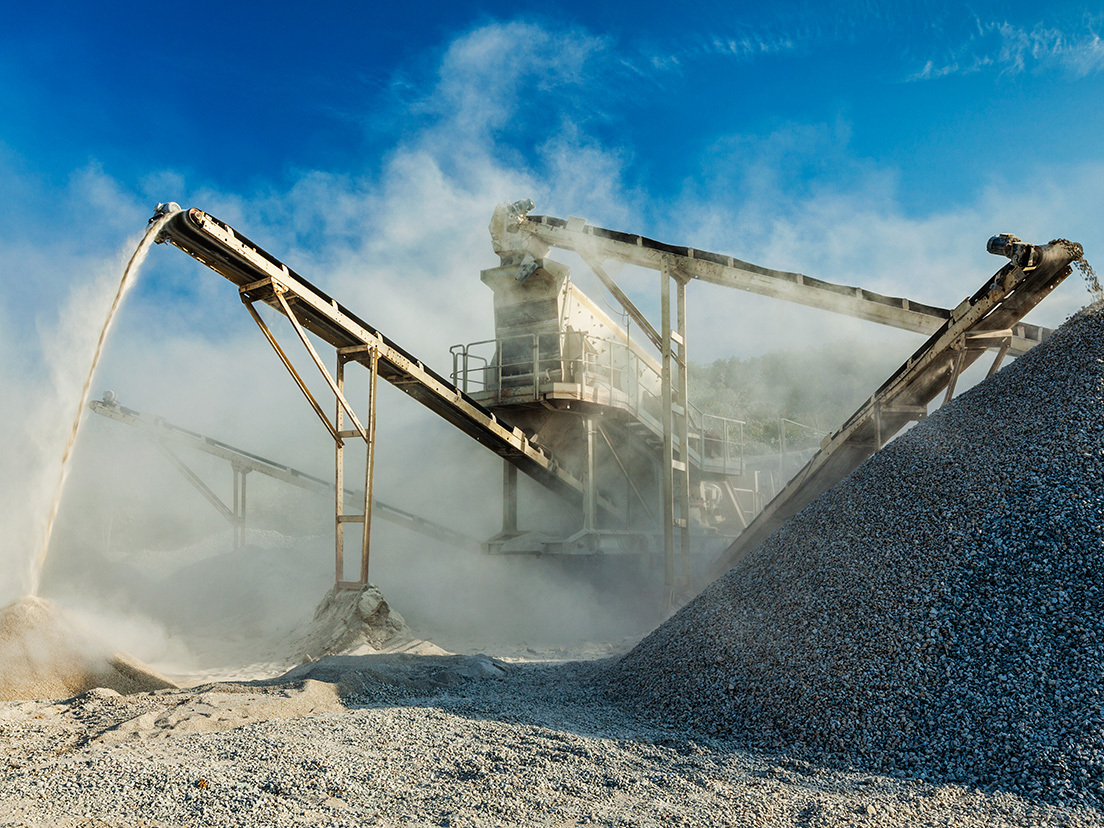
Take a quarry as an example: after blasting, the rock is extracted from the mountain, but it cannot be put to immediate use. It must first undergo further processing and crushing to be reduced to specifications suitable for application. Crushing itself involves several stages, with the first stage commonly referred to as primary crushing. Symons cone crushers and European-style jaw crushers are both widely used primary-crushing equipment. Symons cone crushers offer advantages such as high production capacity and low specific energy consumption; however, they also suffer from drawbacks such as complex structure, high cost, and challenging installation and maintenance. In contrast, European-style jaw crushers are far more widely employed.
Take a quarry as an example: after blasting, the rock is extracted from the mountain, but it cannot be put to immediate use. It must first undergo further processing and crushing to be reduced to specifications suitable for application. Crushing itself involves several stages, with the first stage commonly referred to as primary crushing. Symons cone crushers and European-style jaw crushers are both widely used primary-crushing equipment. Symons cone crushers offer advantages such as high production capacity and low specific energy consumption; however, they also suffer from drawbacks like complex structure, high cost, and challenging installation and maintenance. In contrast, European-style jaw crushers are far more extensively employed.
The European-style jaw crusher is famously known in the industry as the “Tiger’s Mouth” due to its exceptional crushing capacity. It is capable of handling highly hard and abrasive materials such as granite and quartzite, as well as moderately hard materials like limestone. In addition, it offers high production output, flexible configuration options, and convenient inspection, maintenance, and repair. These numerous advantages have led to its widespread adoption across the industry.
In general, having a European-style jaw crusher stationed at the front end of the production line is sufficient to ensure quality control at the first stage. While European-style jaw crushers boast outstanding performance, just as a fine sword must be regularly polished to maintain its sharpness, these machines also require diligent routine maintenance and care to guarantee long-lasting, reliable operation and smooth production processes.
I. Pay close attention to the bearing and toggle plate areas.
1. Abnormal Bearing Temperature Rise
The cheetah is the fastest land animal, yet it can only sustain top speed for a few hundred meters before needing to stop—its body overheats in the process. Similarly, machines must be shut down when they overheat; for instance, if a train’s axle temperature exceeds the safe threshold, emergency measures must be taken immediately, or axle fires and other catastrophic failures could occur, with devastating consequences.
Abnormal bearing overheating is also a common fault in European-style jaw crushers. Typically, such crushers are equipped with four sets of bearing assemblies: two between the eccentric shaft and the moving jaw, and two between the eccentric shaft and the frame. This underscores the critical role of bearings in European-style jaw crushers; during operation, abnormal increases in bearing temperature are fairly frequent, and excessive temperatures can lead to bearing failure or burnout.
There are various reasons for the abnormal rise in bearing temperature in European-style jaw crushers:
Severe bearing wear causes geometric changes in the inner race, outer race, and rolling elements, increasing the clearance between bearing components and leading to a rise in bearing temperature. Therefore, during routine maintenance, it is essential to carefully inspect the condition of the bearings and replace them promptly when necessary. Blockage of the lubrication oil holes can result in oil starvation; insufficient or excessive lubricant levels alike will cause bearing temperatures to increase. When operating equipment, even seemingly minor details such as oil holes—often easily overlooked—must be thoroughly checked. In addition, the choice of lubricant should be appropriate: select bearing lubricant based on factors such as operating temperature, speed rating, and lubrication method. If the lubricant viscosity is too low or too high, an effective oil film may fail to form, making it difficult for the heat generated during bearing operation to be dissipated.
2. Spindle Breakage
The main shaft is the primary component of the power transmission system in European-style jaw crushers; any malfunction of the main shaft will result in a machine shutdown.
Due to inadequate heat treatment in some manufacturers, the spindle’s inherent performance may be compromised, resulting in insufficient fatigue resistance. During operation, encountering hard objects such as iron blocks can create excessive resistance, placing additional load on the spindle and potentially leading to cracking.
Improper operation during use—such as uneven material feeding—can cause the machine to become unstable at high speeds, thereby accelerating wear on the spindle.
To prevent spindle breakage, the following measures can be taken:
Lubricate the machinery as required, and during operation regularly inspect the lubrication condition of the equipment and monitor its operating load; address any abnormalities promptly.
It is essential to closely monitor the equipment’s operating condition; for instance, any foreign objects that enter the machine must be promptly removed to ensure the equipment remains in good working order.
After maintenance, components should be properly handled: those that need to be scrapped or are found to be defective must be replaced promptly, while damaged components should be collected and recycled. Special attention must be paid to ensure that discarded components are never mixed with other materials.
Proper feeding requires constant monitoring of the feed rate, with particular attention to avoiding overfeeding, which can lead to spindle fatigue and fracture.
3. Elbow plate fracture/bending
The elbow plate is a cast-iron component that serves as both a load-transmitting element and a safety device for the machine.
The primary causes of toggle plate failure are an excessively small discharge opening, the jamming of non-crushable material at the bottom of the crushing chamber, or improper installation of the toggle plate. Therefore, during the operation of the European-style jaw crusher, it is essential to carefully control and adjust the discharge opening, prevent non-crushable material from entering the crushing chamber, and verify that the toggle plate is installed correctly.
II. Focus on materials, feeding methods, and related aspects
1. High moisture content or high viscosity of the feed material: During operation, if the feed material has a high moisture content, the particles tend to stick together after being crushed into smaller pieces, clogging the jaw plates in the crushing chamber and causing material blockage. Similarly, if the feed contains highly sticky soil, the material will agglomerate and jam inside the crushing chamber, leading to blockage. Over time, this not only reduces production efficiency but also causes corrosion of the jaw plates.
Therefore, prior to production, the material can be screened using a low-oil, maintenance-free circular vibrating screen or a vibratory feeder, and then dried by natural wind or sunlight to reduce its moisture content and viscosity.
2. Feeding method: The primary considerations are feed particle size, feed rate, and the discharge opening.
If the material particles exceed the specified particle size, they can easily jam and block the machine chamber, and each blockage will result in a prolonged equipment shutdown. Therefore, it is essential to strictly control the material particle size.
During operation, overfeeding beyond the crushing capacity of the European-style jaw crusher can also lead to blockage. The European-style jaw crusher operates on a semi-cyclic principle; excessive feed input prevents timely crushing, and the crushed material cannot be discharged efficiently and promptly, resulting in material jamming. Therefore, during production, feeding must be strictly controlled according to specifications—neither too little nor excessively abundant—to ensure the stable and reliable operation of the European-style jaw crusher.
Material blockage may also occur when the discharge opening is too small, preventing the crushed material from being discharged promptly and causing it to accumulate within the crushing chamber. Therefore, it is essential to ensure effective coordination between discharge and feeding, and to adjust the discharge opening size in a timely manner based on the feeding conditions, so as to guarantee that the crushed material can be discharged efficiently through the discharge opening.
III. From the perspective of maintenance and upkeep, equipment lubrication must be given due attention.
Lubrication is indispensable for any moving mechanism; for example, the human knee joint contains synovial fluid, which acts as a biological lubricant. When the amount of synovial fluid is insufficient, joint wear is accelerated, leading to fatigue and pain. Similarly, in reciprocating machinery, high-quality lubrication is essential for maintaining optimal performance and extending service life.
For European-style jaw crushers, critical lubrication points include the connecting-rod bearings, eccentric shaft, and moving-jaw bearings. Prior to lubricant injection, ensure that the lubricant is clean and properly cooled to maintain an appropriate viscosity; furthermore, the lubricant must be replaced promptly after a specified service interval.
The daily operation of European-style jaw crushers is all about “hard, direct impact.” During production, it is essential to promptly and closely monitor the maintenance and replacement of critical components, while also implementing scientific and rational production scheduling. Only in this way can European-style jaw crushers deliver long-term, stable output, reduce costs, and enhance overall production efficiency.
Key words:
Learn more about industry dynamics
A mining machinery manufacturing enterprise that mainly produces crushing and screening machinery, integrating R & D, design, processing, manufacturing, sales and after-sales service.



Focus on crushing and screening machinery industry solutions
58 Guangshen Road, Luoxin Park, Economic and Technological Development Zone, Xin'an County, Luoyang City, Henan Province
Online message
We will contact you within one working day. Please pay attention to your phone or email.